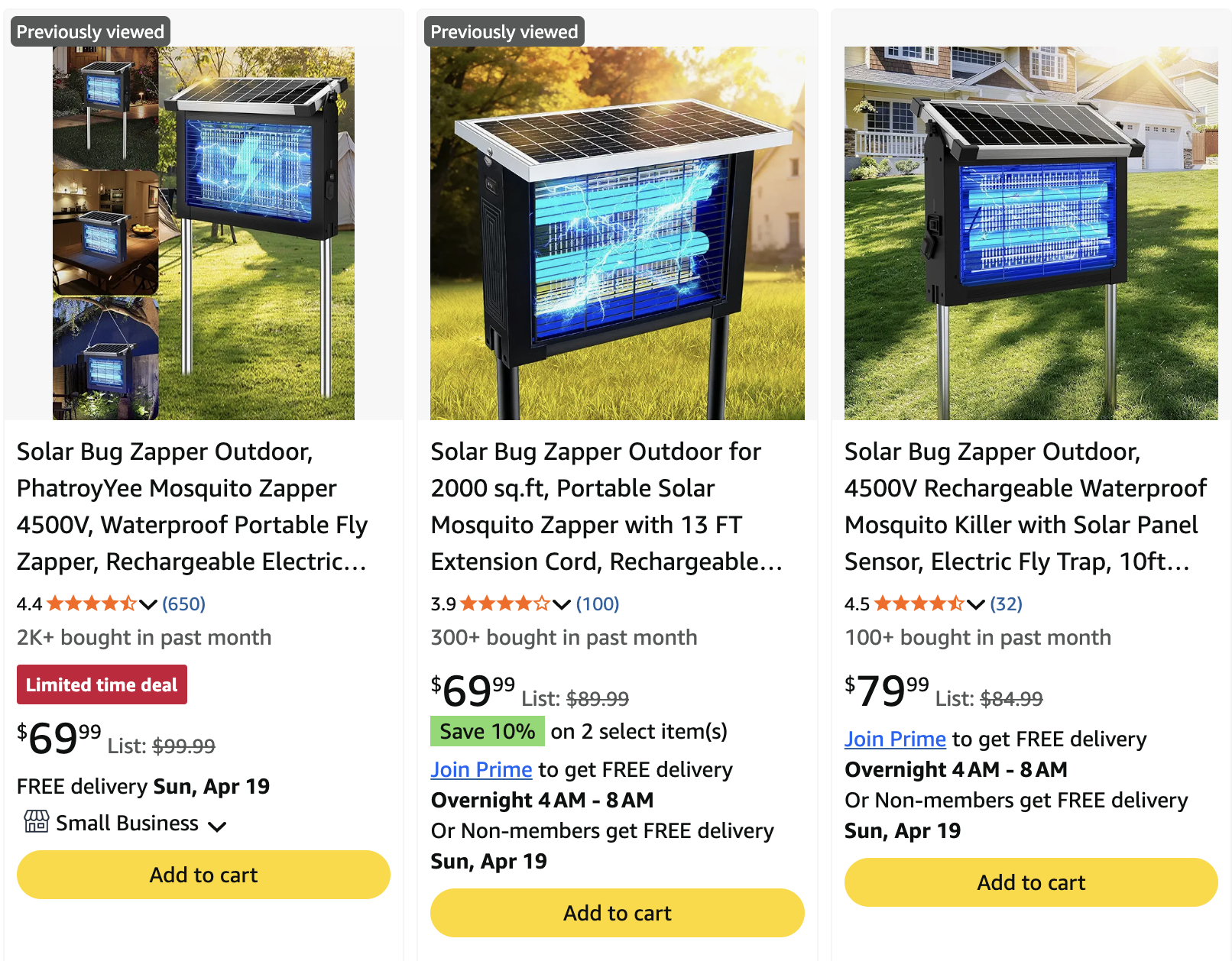
GroundGuard Sentinel Solar Bug Zapper
| Voltage | 4,500V |
|---|---|
| Coverage | 2,100 sq ft |
| Power Source | Solar panel + USB-C backup |
| UV Attraction | Dual full-length UV tubes |
| Battery | 4,000mAh rechargeable |
| Waterproof | IPX5 |
| Weight | ~3 lbs |
| Modes | Auto (dusk-to-dawn) / Manual On / Off |
| Mounting | Ground stakes, hanging chain, flat surface |
| Extras | 10ft solar panel extension cord, cleaning brush |
Our Take
We almost didn't test this one. Another solar bug zapper? We've seen dozens of those come through, and most of them share the same problem: a tiny solar panel the size of a drink coaster that can't hold a charge past midnight. We expected more of the same.
We were wrong.
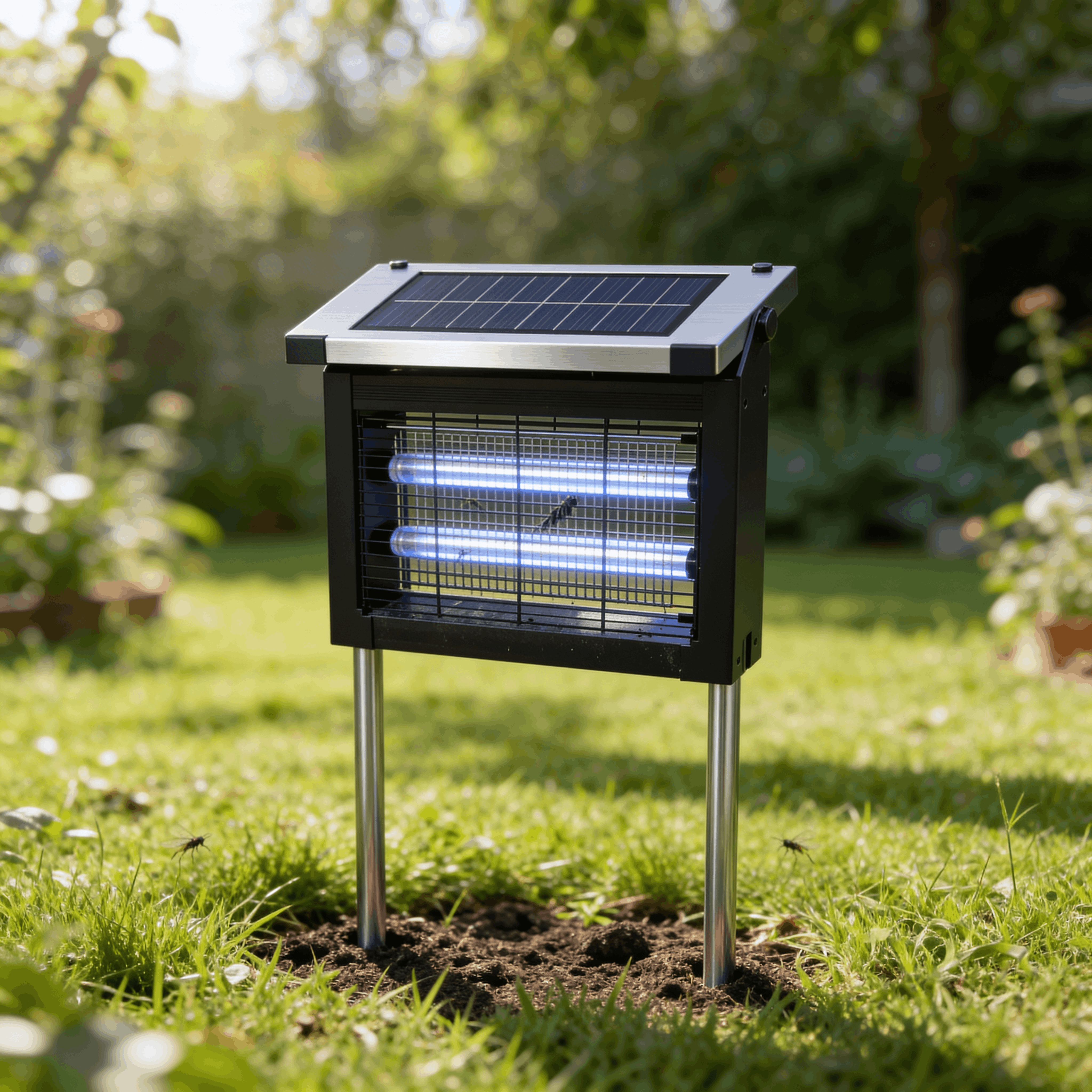
The first thing we noticed out of the box was the solar panel. It's not the small circular cell crammed into the lid that you see on every other solar zapper on Amazon. This is a full-sized, dedicated panel that sits on top of the unit or can be detached and positioned up to 10 feet away using the included extension cord. That means you can stake the zapper in the shade under your patio umbrella and put the panel out in the sun. Small detail, massive practical difference.
Setup took under 5 minutes. Attach the metal legs, push the ground stakes into the soil, connect the solar panel, flip it to Auto. Done. No outlet hunting. No extension cord routing across the yard where kids and dogs trip on it. No mounting hardware or shepherd's hooks.
It charged through the afternoon, and as soon as the sun dropped, the dual UV tubes kicked on automatically. Within 20 minutes, we heard the first zap. Then another. Then what one of our testers described as "popcorn night" — a steady, satisfying series of pops that continued well past midnight.
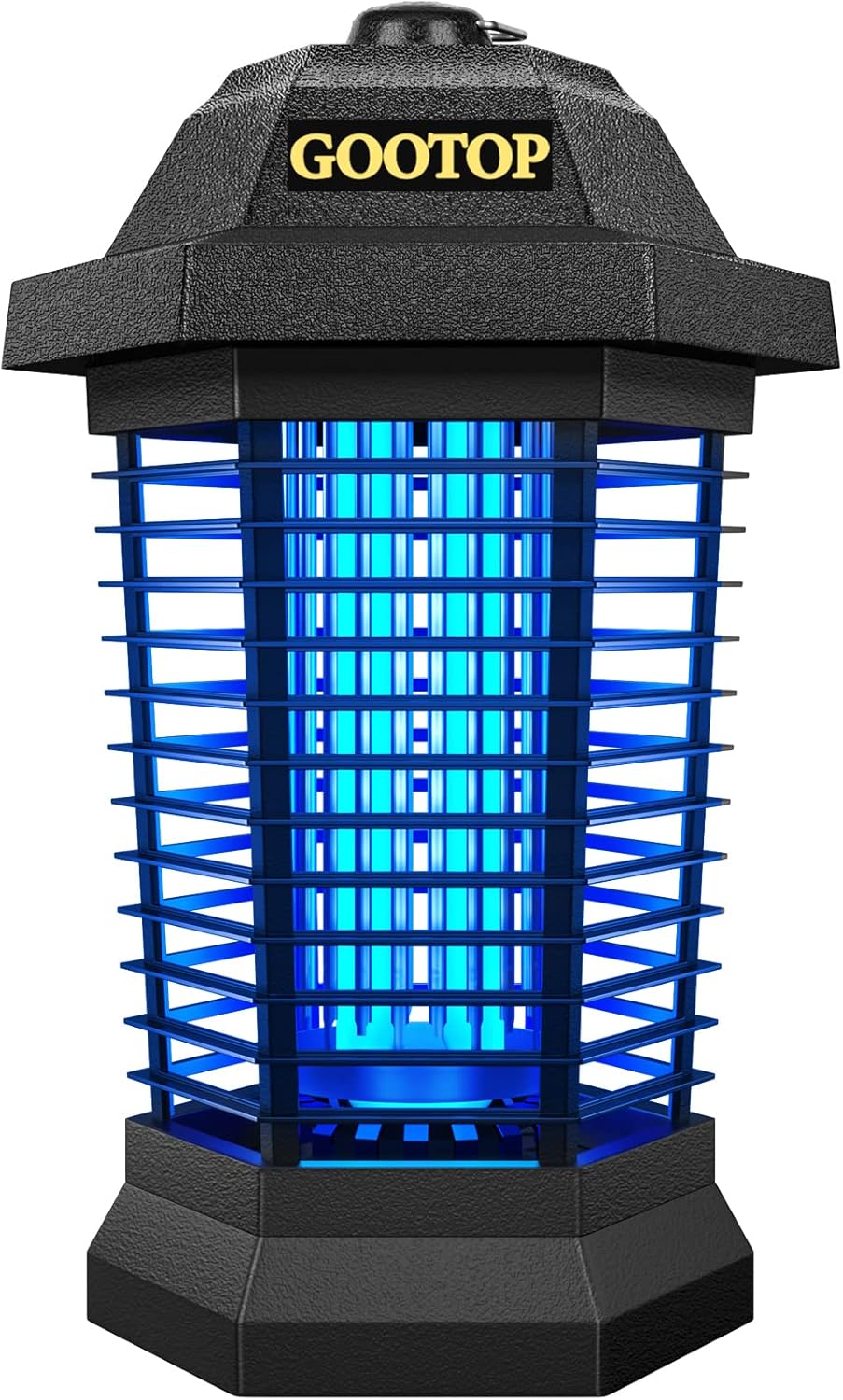
The dual UV tubes are the real differentiator here. Most solar zappers (and frankly, most budget corded zappers) use a single small bulb. This unit uses two full-length tubes that throw a wider, more intense UV field. In our side-by-side testing at the Florida property, it consistently attracted more insects than the GOOTOP — a corded zapper with access to unlimited AC power.
The 4,500V grid delivers clean, instant kills. We didn't see the "stunned but alive" problem that plagues lower-voltage units. Bugs hit the grid and dropped. The metal construction on the grid itself also feels substantially heavier-gauge than the generic solar zappers we've tested. After 8 weeks outdoors, including multiple storms, zero rust on the grid or stakes.
We ran it on Auto mode exclusively after the first week. It charges during the day, activates at dusk, runs all night, shuts off at dawn. Repeat. We genuinely forgot about it for days at a time, which is exactly what you want from a bug zapper. When we checked it, it was caked with dead insects. That's how you know it's working.
The USB-C backup port is a smart inclusion. On cloudy stretches, you can top off the battery from a portable charger or wall adapter. We only needed to use it once during a 4-day overcast period in North Carolina. The rest of the time, solar was more than sufficient.
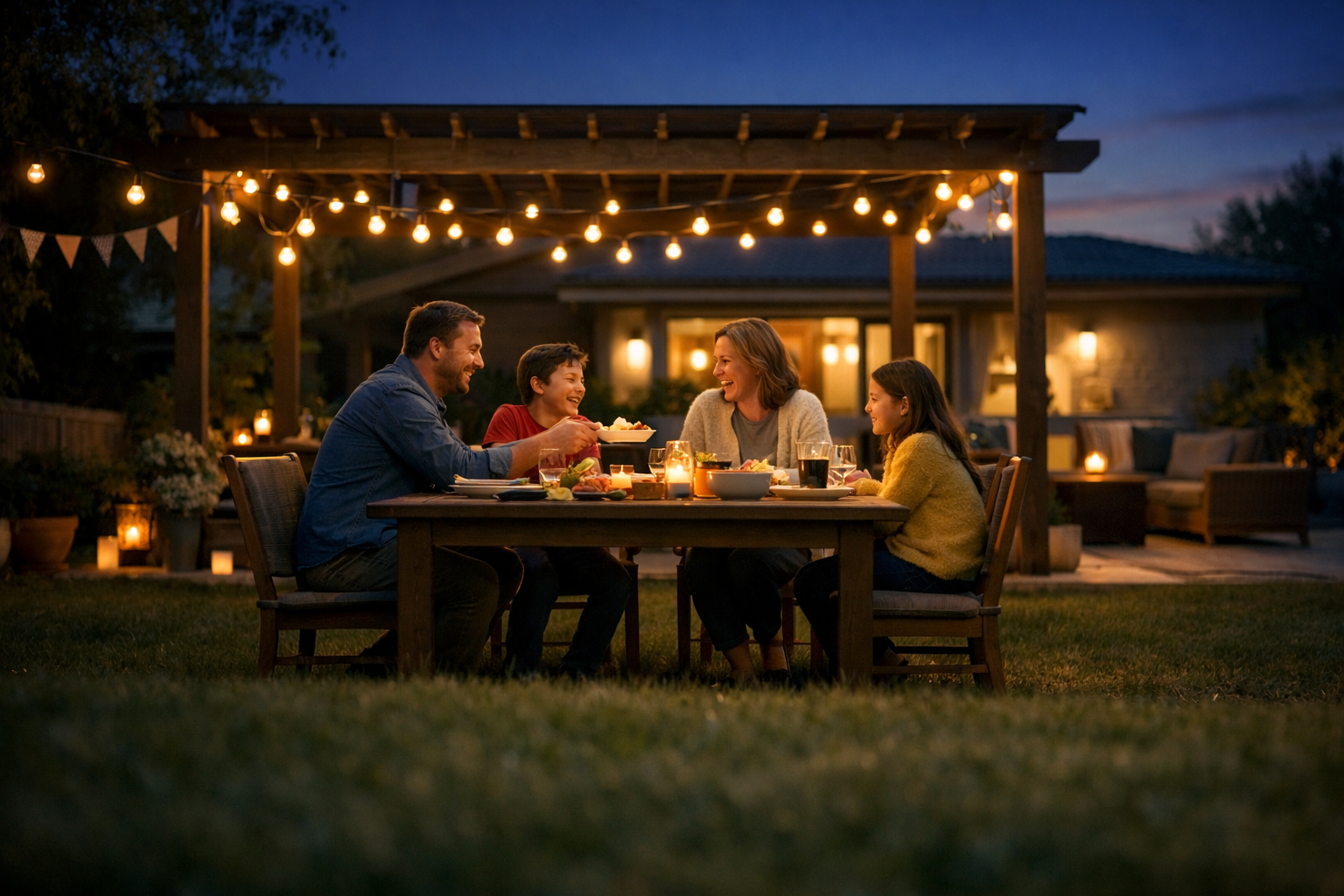
One note on the mosquito question: Yes, we've read the studies. Mosquitoes are primarily attracted to CO2 and body heat, not UV light. But here's what most people miss — CO2 brings mosquitoes into your general area, and then they use visual cues to choose where to land. A UV zapper doesn't attract mosquitoes from across the neighborhood. It intercepts the ones already heading toward you by giving them a brighter, more compelling target. It redirects, it doesn't recruit. In our testing, bite counts dropped significantly in the immediate area around the zapper compared to evenings without it running.
What we liked
- Truly cordless — stake it anywhere, no outlet needed
- Dual UV tubes outperform most single-bulb competitors (including corded models)
- Auto dusk-to-dawn mode means zero daily effort
- Large, detachable solar panel actually charges reliably (10ft extension cord is a great touch)
- 4,500V grid delivers instant, audible kills
- IPX5 waterproof held up through multiple storms
- Metal stakes and grid — noticeably better build than other solar zappers
- USB-C backup for cloudy stretches
- Portable enough for camping and RV trips
- Zero ongoing costs — no cartridges, bulbs, or electricity
What could be better
- Only available online (not in retail stores yet)
- Demand has caused occasional stock issues during peak summer
- At $189.95, pricier than basic plug-in zappers (though cheaper long-term)